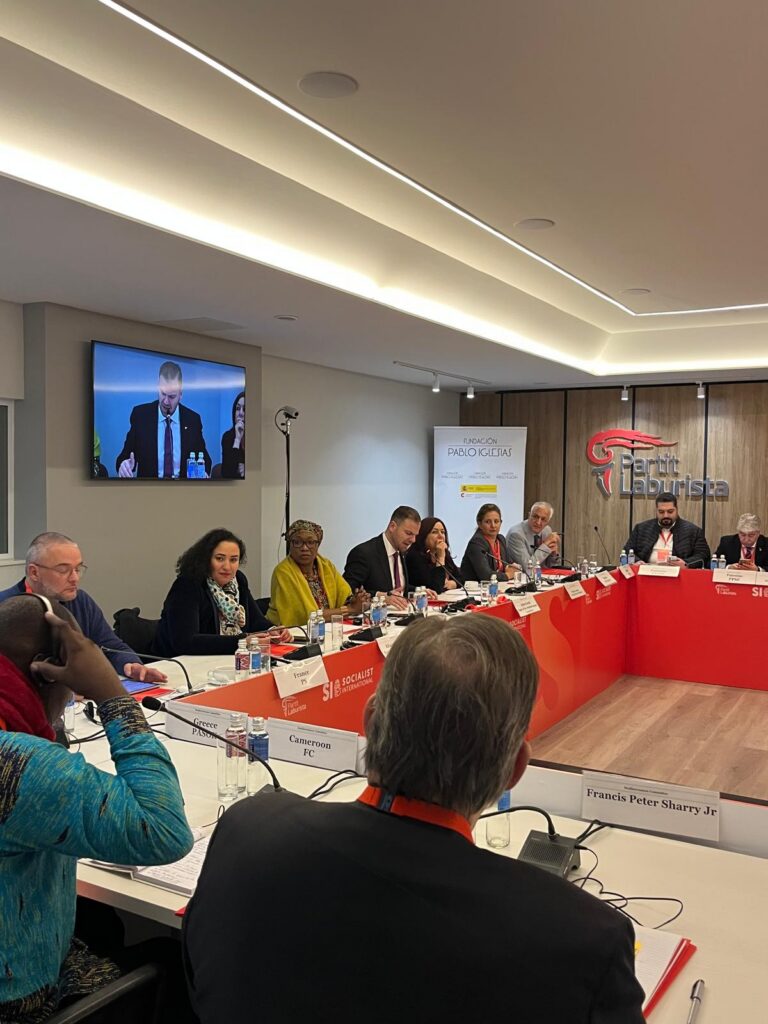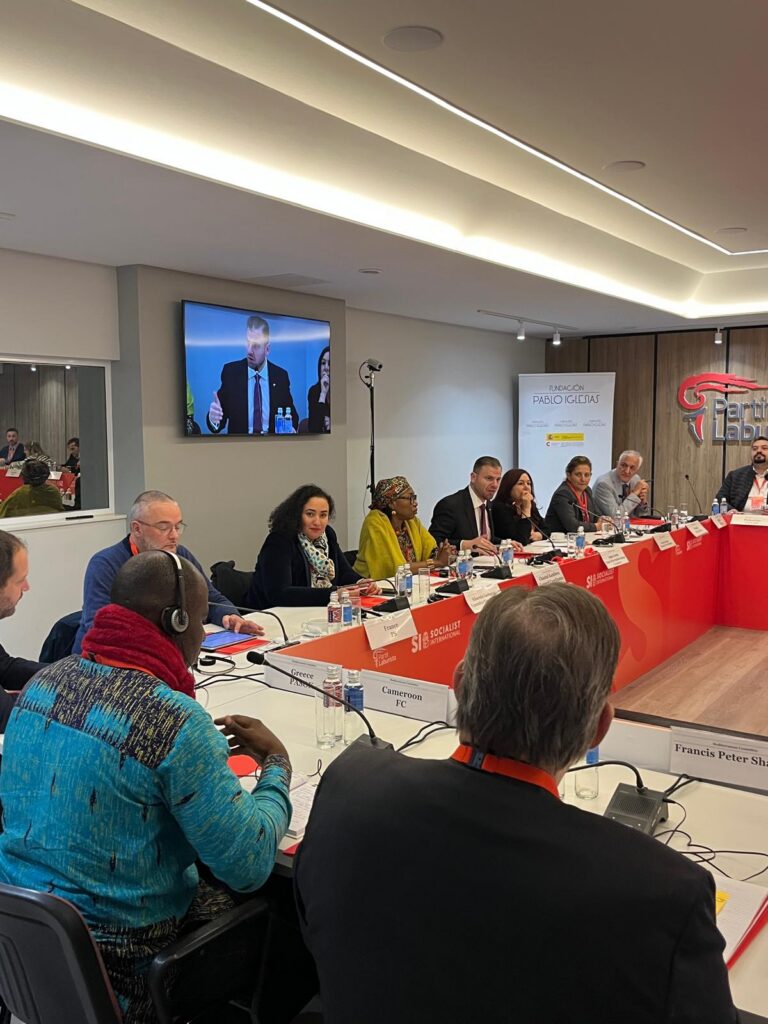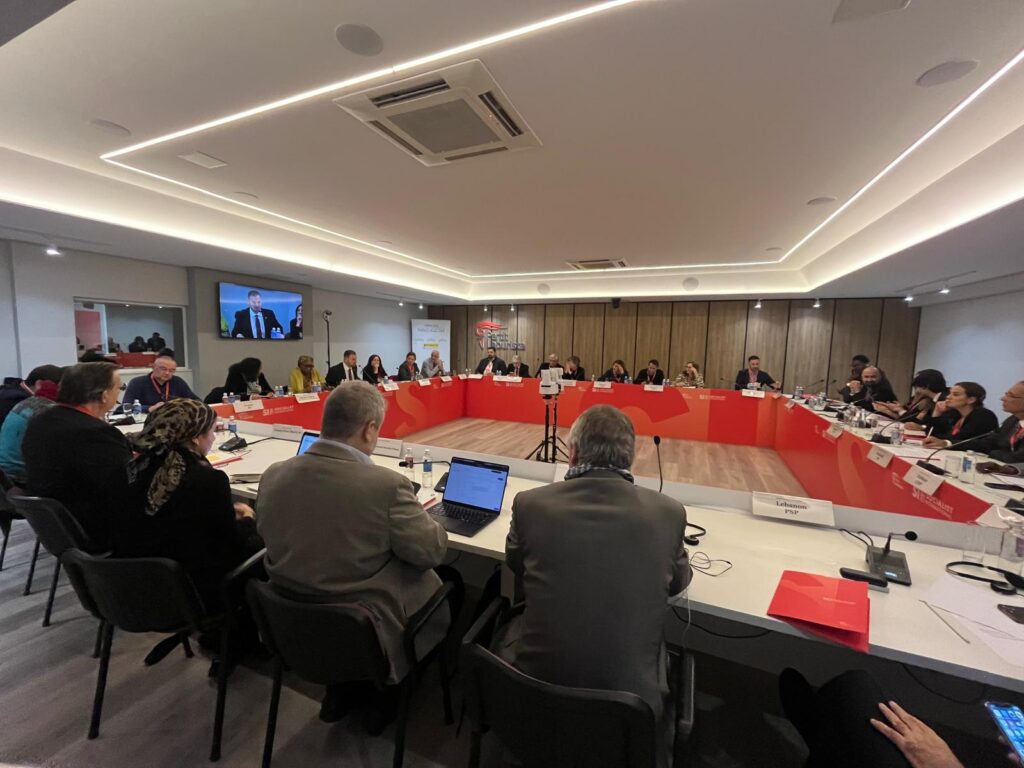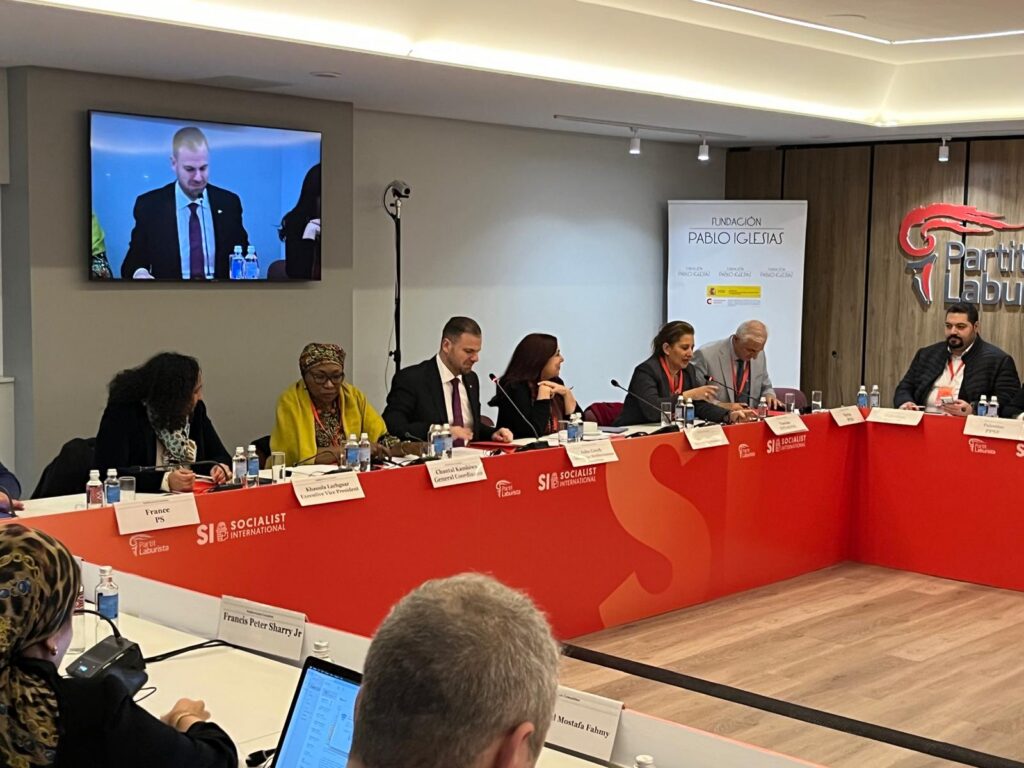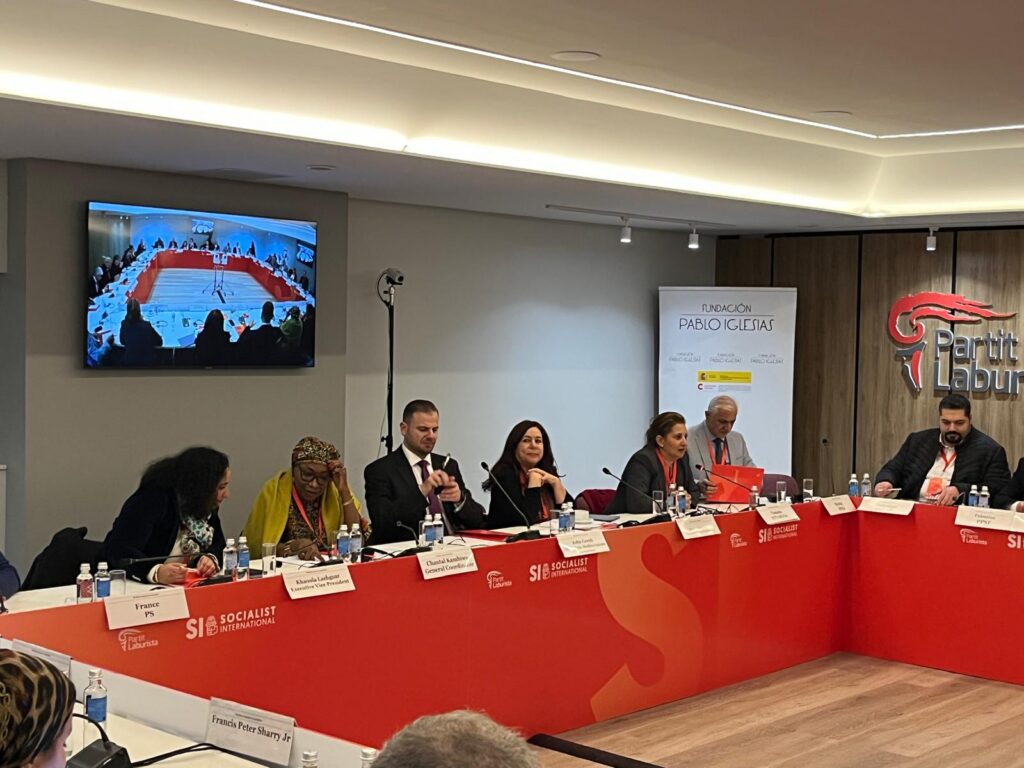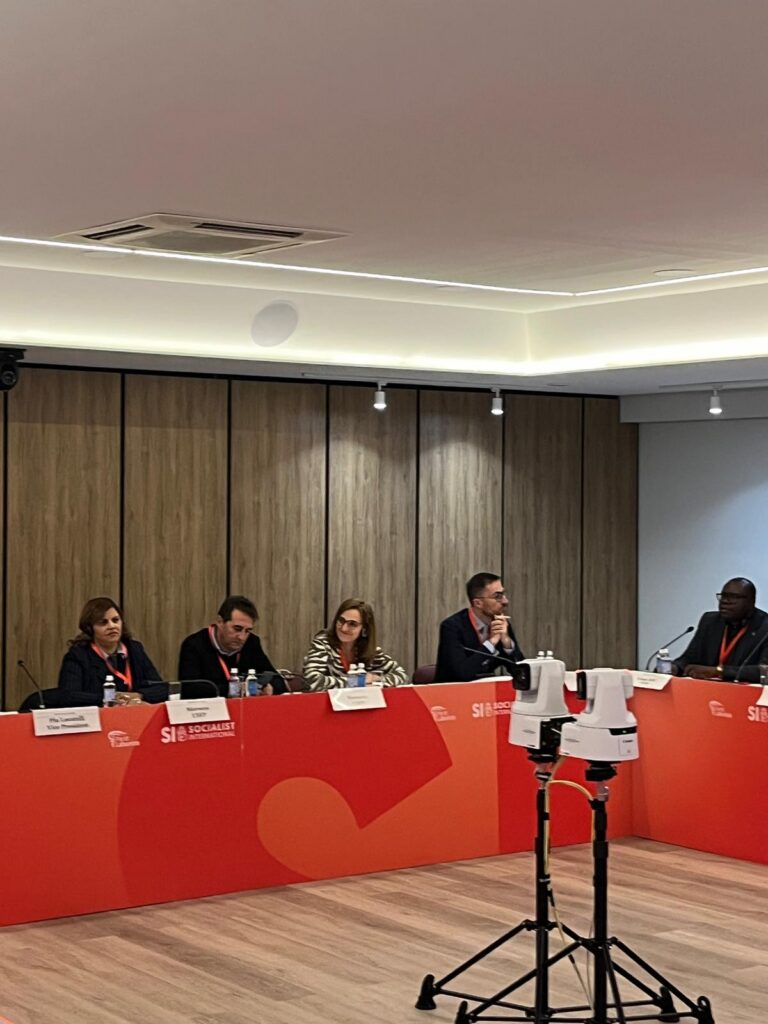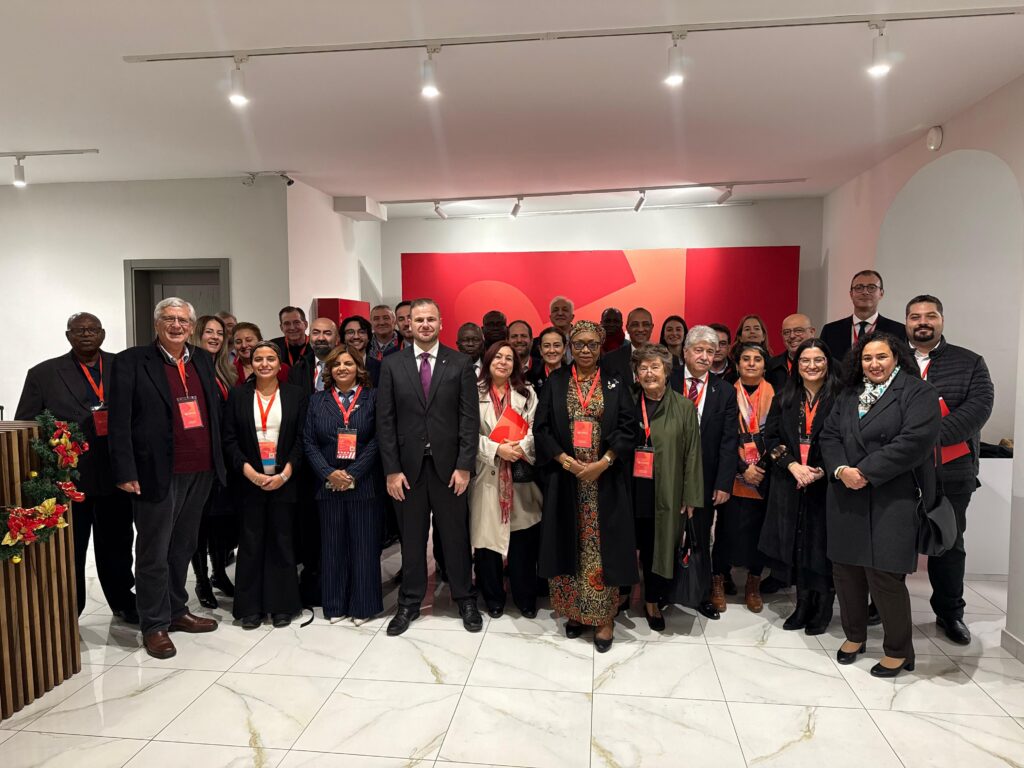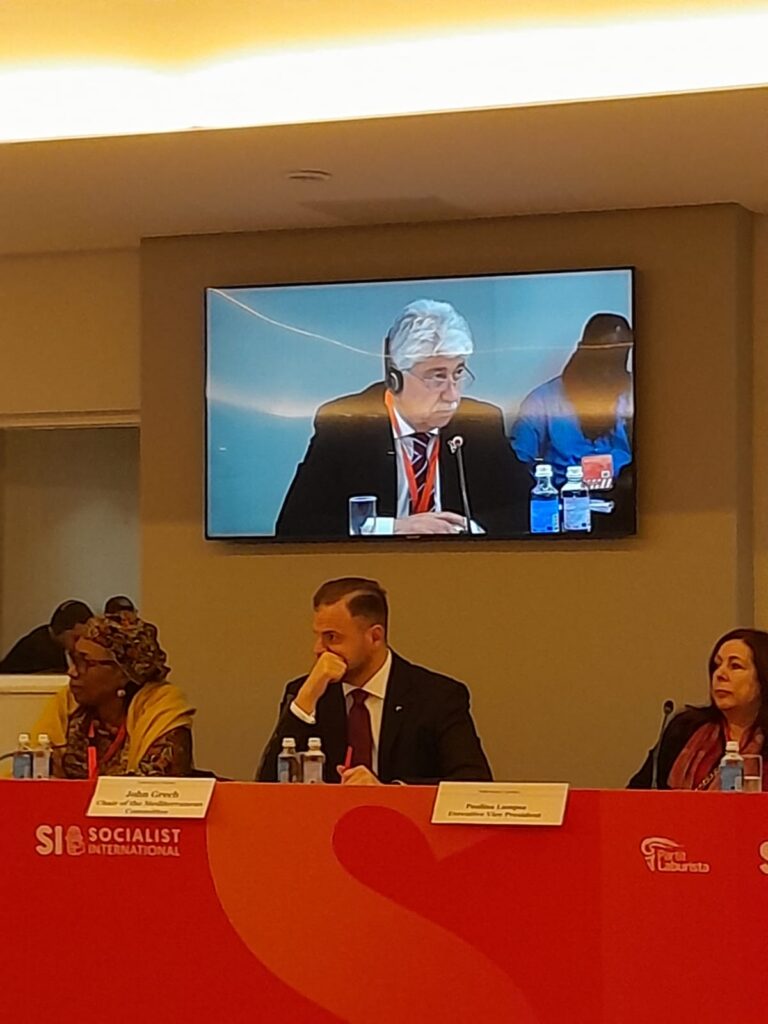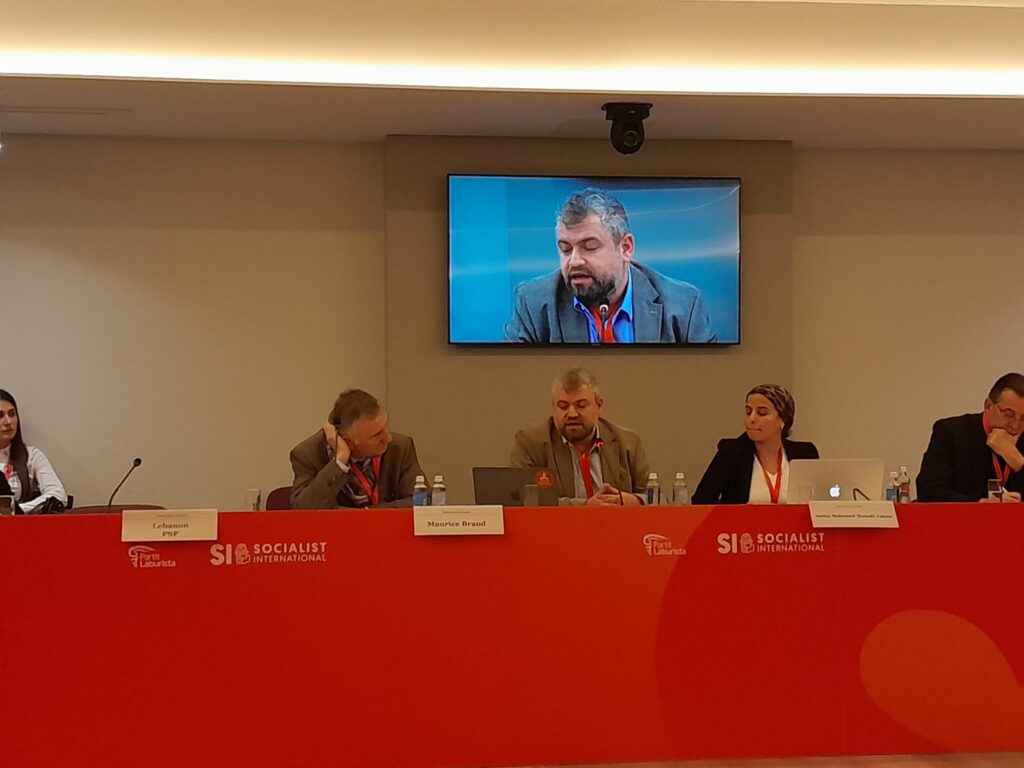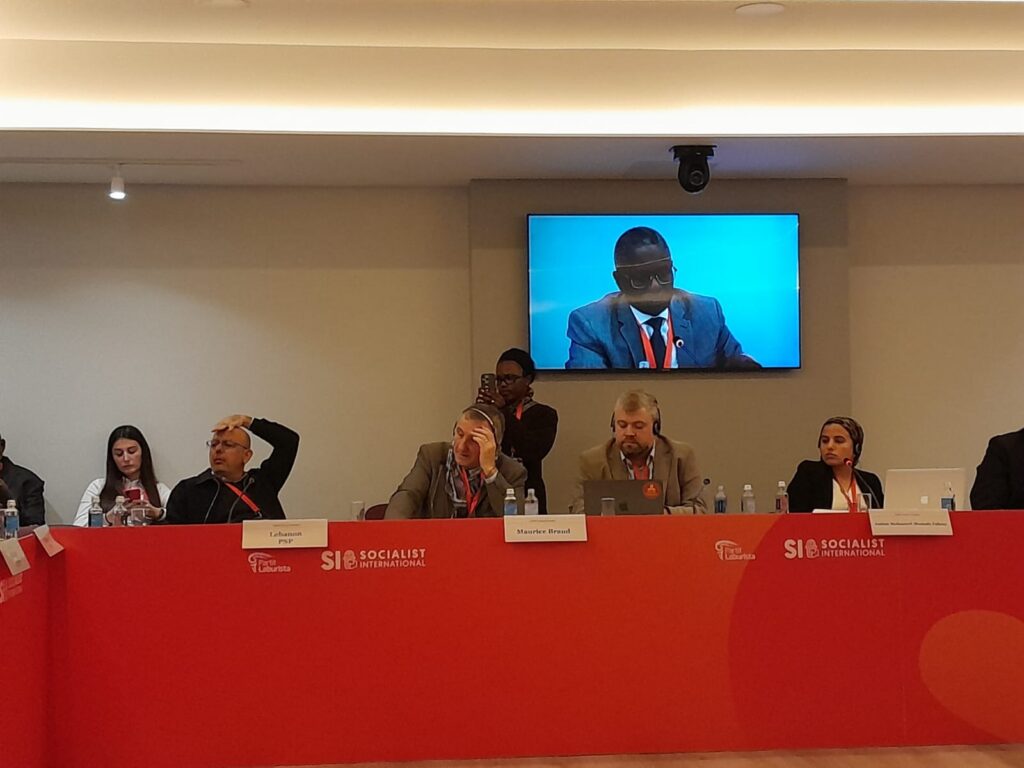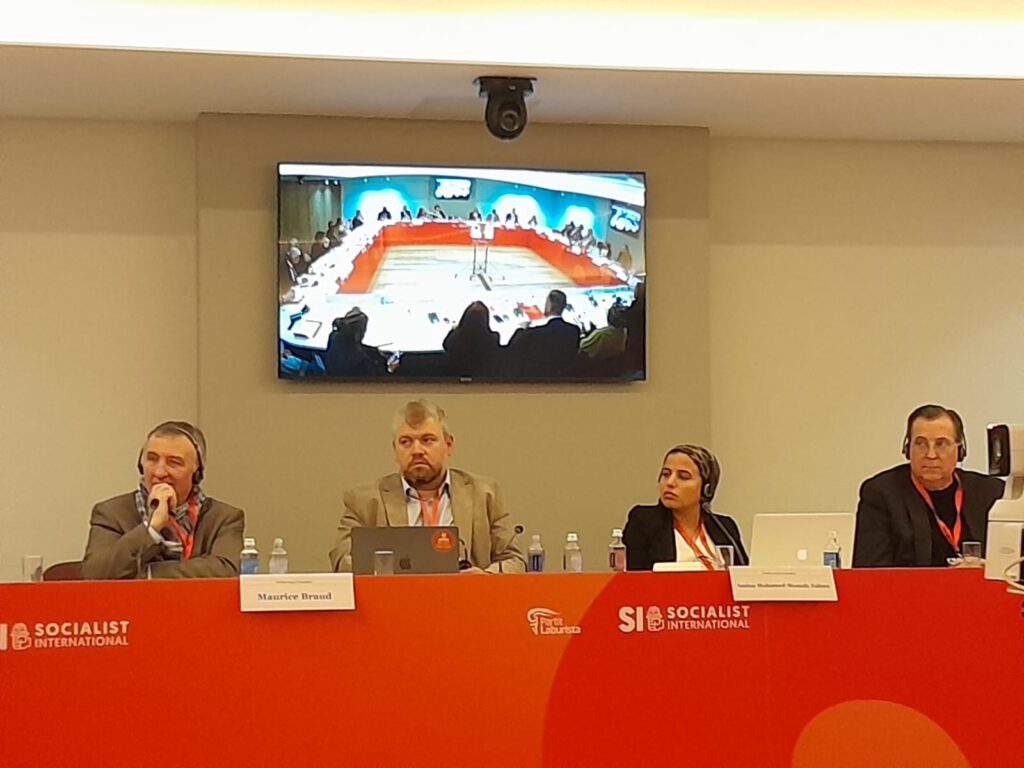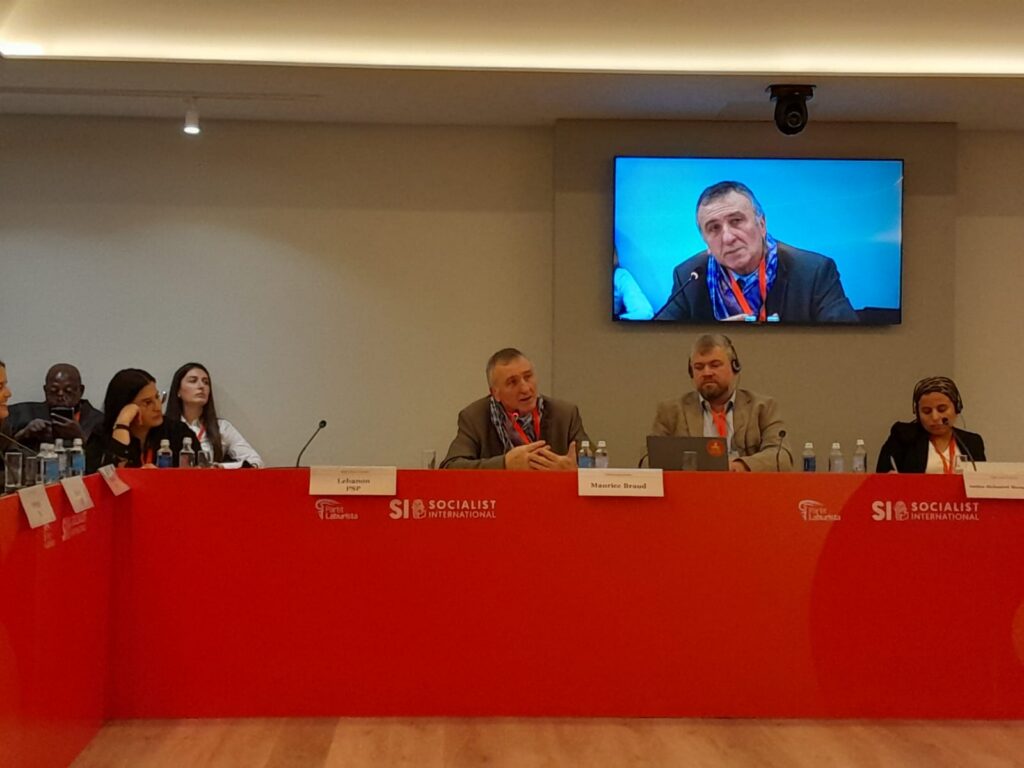
Workshop organised by the Global Progress Foundation, Left Forward and Fundación Pablo Iglesias in the framework of the SI Mediterranean Committee
Population Movements in the Mediterranean
Challenges and Progressive win-win approaches
Speakers
- Frank Sherry , leader on communication related to migration, US
- Amina Fahmy, political scientist , expert on migration from Egypt
- Maurice Braud , senior expert on international and European policies,France
- Moderator Manos Moschopoulos , Executive Director of LeftForward and Senior Advisor to the Mediterranean Migration and Asylum Policy Hub
Concept
The Mediterranean Sea, the center of gravity for civilizations and a meeting point of peoples and cultures for millennia, has in recent decades been recast as a divisive frontier. Rather than serving as a bridge uniting diverse communities, it has become a stark symbol of inequality and a site of human suffering.
For progressive parties , this transformation is both a humanitarian and political challenge: the sea that once fostered cooperation and mutual enrichment now exposes urgent questions about our values, our commitments to inclusion and justice, and the need to devise fair, principled, and effective responses to the realities of migration and displacement.
To restore confidence and counter right-wing narratives, progressive parties should champion policies that are both principled and pragmatic: ensuring safe and legal migration channels, investing in effective integration, and guaranteeing fair labour standards.
This workshop encouraged an interaction between leading experts and representatives of political parties from both shores of the Mediterranean to forge new ground in progressive migration policy, demonstrating how humanitarian values can be translated into effective solutions for governments and communities.
Migration remains one of the most defining and urgent challenges facing the Mediterranean region, demanding responses that are principled, practical, and attuned to local realities. In confronting this reality, it is crucial to involve in the conversation both “export” and “recipient” countries as it is the only way to reaffirm the Mediterranean’s potential as a space of solidarity, shared responsibility, and hope for all.
Following the panelists presentations an in depth interactive discussions was held with participants from the three shores of the Mediterranean. Speakers thanked the organizers for the innovative approach to bring together decision makers and experts , highlighting that to shape the right policies on this issue it’s crucial to compare the findings of research with the reality on the ground . A discussion took place also on the difficulties that progressive parties have to tackle migration issues in a political environment dominated by extreme right narratives and specific strategies were examined .
The conclusions of the workshop were taken into account by the Chair of thd Committee and SI member parties representatives for a Declaration on Migration that was adopted by the Malta Council . You can find the text of the Declaration below:
Declaration on Progressive Migration Policy in the Mediterranean
Following the exchange of views that took place in the framework of the Socialist International Mediterranean Committee ,we declare that
to address the challenge of population movements in the region we need to:
-Chart a new course for progressive migration policy—one grounded in solidarity, evidence, and shared prosperity.
– Address migration as an opportunity. and reject externalization policies that undermine fundamental rights without expanding legal options for migrants and refugees.
OUR VISION
We envision a Mediterranean region where:
– Migration serves development. Rather than treating migration as a security threat, we integrate it into comprehensive development frameworks. We recognize that remittances are development capital. We acknowledge demographic complementarity: Europe faces aging and labor shortages; Africa and the Middle East have youth and talent. This can be a win-win if managed through legal pathways and genuine partnership.
– Origin and transit countries are genuine partners. In contrast with the current EU’s enforcement-focused externalization model, we support responsibility-sharing frameworks that address root causes—conflict, authoritarianism, economic collapse—rather than merely managing flows. It is crucial to coordinate on development, democratic governance, and climate resilience.
– Gender and vulnerability are centered. Migration policy has systematically neglected women, children, and families. We need to invest in women’s economic empowerment and skill recognition, simplify family reunification procedures, protect migrant women from trafficking and labor exploitation. We recognize that integration begins with education, healthcare, and community-building.
-Regional cooperation should replace fortress mentality. The Mediterranean was historically a bridge .It is important to expand legal labor mobility pathways, to recognize credentials and skills, and to foster South-North partnerships that strengthen rather than exploit transit and origin countries.
– Integration succeeds at the local level. We have learned from communities across our region that deliberate investment in education, housing, healthcare, and interfaith dialogue builds coexistence. We will champion these local successes and use them to counter national-level xenophobia.
THE CHALLENGE AHEAD
We face a moment of decision. The far right is ascendant across multiple continents. Authoritarian leaders weaponize migration to advance anti-democratic agendas. And the climate crisis will displace millions more, intensifying pressures on the Mediterranean region.
Yet we also face unprecedented opportunity. We have evidence of what works: legal pathways reduce irregular migration; development investment addresses root causes; local integration succeeds when resourced adequately; and regional cooperation strengthens all parties. We have the intellectual capital, the institutional networks, and the democratic mandate to lead.
We commit to building the political courage to move beyond defensive positioning and offer citizens a compelling vision of inclusive, prosperous, connected Mediterranean societies.
We call on progressive parties across Europe, Africa, and the Middle East to join us in this effort. Together, we can restore the Mediterranean as a space of solidarity, share responsibility and hope.